BPC-157 Sixpex USA
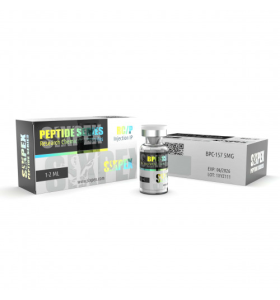
- Brand: Sixpex USA
Your order will be delivered via USPS trackable service within 5-6 business days after payment processing.
More Information
| Product Features | |
| CLASSIFICATION | PEPTIDE HORMONE |
| DOSAGE | 1-10 MCG/KG |
| ACNE | NO |
| WATER RETENTION | NO |
| HBR | NO |
| HEPATOTOXICITY | NO |
| AROMATIZATION | NO |
$35 flat rate
Crypto, Venmo, Zelle, Credit Card, WU
Your data is protected with the highest security standards.
⚠️ WARNING: Health Risks of Anabolic Steroids
Anabolic steroids significantly impact the body and require professional supervision. Improper use may cause serious health risks including hormonal disruptions, liver stress, heart problems, and mental health changes. Always source steroids from reputable suppliers and use them responsibly if you choose to proceed.
What Is BPC-157 Sixpex USA?
BPC-157 is a synthetic peptide composed of a 15-amino-acid sequence, inspired by a naturally occurring protective compound found in human gastric juices. The long scientific sequence of BPC-157 is derived from this naturally present protein fragment.
The abbreviation “BPC” stands for Body Protection Compound, reflecting its origin in gastric tissue. In scientific research settings, BPC-157 has been evaluated for its potential biological interactions involving tissue repair, inflammation response, and cellular regeneration.
Although BPC-157 has been widely discussed in online performance and wellness communities, it is not an FDA-approved treatment and is not classified as a medication for human use. Human clinical data remains limited.
Technical Specifications
| Specification | Details |
|---|---|
| Active Ingredient | BPC-157 (Peptide) |
| Pack | Varies by supplier (user did not provide pack size) |
| Form | Research Peptide |
If you want the packaging details included (e.g., vial size, mg/mcg quantity), please provide them.
General Information About BPC-157
BPC-157 is commonly referenced in academic and experimental literature for its potential biological activity. Most available data comes from in vitro studies and rodent models, where researchers have explored how the peptide may influence:
Tissue repair mechanisms
Tendon and ligament responses
Gastrointestinal lining interactions
Inflammation-related pathways
Nitric Oxide (NO) system modulation
Angiogenesis (blood-vessel formation)
Bone-related healing in animal models
These findings represent experimental observations only and cannot be directly translated to human outcomes. There are no long-term, large-scale human clinical trials confirming these effects.
Areas Studied in Laboratory and Animal Models
Research has explored how BPC-157 may interact with:
Tendon and ligament cells in controlled laboratory settings
Gastrointestinal tissues affected by induced inflammatory conditions
Muscle injury models following corticosteroid exposure
Bone defects in animal subjects
Wound healing and vascular tissue preservation
It is important to emphasize that the majority of the published data originates from a single Croatian research group, and independent replication is limited.
Scientific and Regulatory Context
BPC-157 cannot be patented, which limits commercial pharmaceutical interest.
It is not approved by the FDA, EMA, or other major medical regulatory bodies.
It is not classified as a drug, supplement, or medical therapy for human use.
Its legal status varies by region, especially regarding research peptides.
Regarding sports regulations:
While many peptides are included in WADA / USADA prohibited lists, BPC-157 is not currently named on the prohibited list.
This may change in the future depending on ongoing regulatory discussion.
Dosing Information (Educational Context Only)
Online discussions and experimental literature reference ranges such as:
1–10 mcg per kg of body weight in animal models
Approximate ranges of 200–800 mcg per day based on anecdotal reports
Divided dosing such as 250–350 mcg twice daily
These figures come from animal research and user anecdotes, not from validated human studies. There is no medically approved human dosage for BPC-157.
Important Summary
BPC-157 continues to gain attention due to its presence in a wide range of published animal studies. However:
There is very limited human clinical data
Research is primarily preclinical
The compound is not FDA-approved
Most studies come from one primary research group
Long-term safety in humans is unknown
Any consideration of peptides should be approached carefully, with awareness of legal regulations and lack of formal medical approval.
Frequently Asked Questions (FAQ)
1. Is BPC-157 approved for human use?
No. BPC-157 is not approved by the FDA or similar health authorities for medical or therapeutic use in humans.
2. Are the benefits of BPC-157 proven in humans?
No. Most evidence comes from rodent studies and laboratory research. Human clinical trials are extremely limited.
3. Why isn’t BPC-157 widely prescribed by doctors?
Because it is a naturally derived peptide fragment that cannot be patented, it lacks commercial pharmaceutical backing, regulatory approval, and formal clinical usage guidelines.
4. Is BPC-157 banned in professional sports?
While BPC-157 is not currently named on the WADA or USADA prohibited lists, athletes must always verify rules regularly since regulations may change.