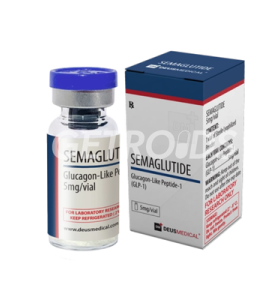
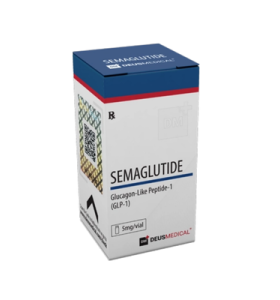
Semaglutide 2 Driada Medical EU

- Brand: Driada Medical EU
Your order will be delivered via air mail trackable service within 10-12 business days after payment processing.
$35 flat rate
Crypto, Venmo, Zelle, Credit Card, WU
Your data is protected with the highest security standards.
⚠️ WARNING: Health Risks of Anabolic Steroids
Anabolic steroids significantly impact the body and require professional supervision. Improper use may cause serious health risks including hormonal disruptions, liver stress, heart problems, and mental health changes. Always source steroids from reputable suppliers and use them responsibly if you choose to proceed.
Semaglutide 2 Driada Medical EU
Important Research Disclaimer: The following information is intended strictly for scientific review and educational purposes. SEMAGLUTIDE 2 mg Driada Medical EU is discussed here exclusively as an investigational "research compound." This text does not constitute medical advice. Laboratory research involving peptides should always be conducted under the supervision of licensed professionals.
What is SEMAGLUTIDE 2 mg (Driada Medical EU)?
Semaglutide 2 mg by Driada Medical is a high-purity research agent utilized in contemporary studies focused on metabolic dysfunction, glycemic regulation, and chronic weight management.
As a potent GLP-1 receptor agonist, this compound is engineered to mirror the physiological effects of the naturally occurring hormone, glucagon-like peptide-1. In a clinical research context, it is primarily evaluated for its ability to stabilize blood glucose and facilitate significant adipose tissue reduction.
Technical Research Specifications
| Feature | Research Detail |
| Manufacturer | Driada Medical EU |
| Active Substance | Semaglutide (High-Purity Peptide) |
| Concentration | 2 mg per vial |
| Format | Lyophilized powder for reconstitution |
| Classification | Incretin Mimetic / GLP-1 Agonist |
The "Double-Barreled" Mechanism of Action
Scientific inquiries into Semaglutide focus on its "double-barreled" approach to metabolic optimization. By activating GLP-1 receptors, researchers observe two primary pathways:
1. Glycemic Optimization
Semaglutide is hypothesized to trigger the release of post-prandial insulin (insulin released after meals). Simultaneously, it may suppress the secretion of glucagon, the hormone responsible for elevating blood sugar, leading to a more stable glycemic profile.
2. Gastric Kinetic Modulation
Research suggests that Semaglutide slows gastric emptying. This delay in digestion may significantly enhance the feeling of satiety (fullness), which is theorized to lead to a natural and sustainable reduction in caloric intake.
Primary Areas of Clinical Research
The scientific community continues to explore Semaglutide across several critical metabolic sectors:
Type 2 Diabetes (T2D) Studies: Research, such as the SUSTAIN program, investigates Semaglutide’s efficacy in lowering HbA1c levels and improving overall glucose disposal in adult subjects.
Chronic Weight Management: The STEP clinical trials have highlighted Semaglutide’s potential for significant weight loss in obese subjects, often outperforming placebo groups by a clinically substantial margin.
Cardiovascular & Lipid Research: Ongoing studies look at how GLP-1 agonists may influence blood pressure, cholesterol markers, and systemic inflammation.
Observed Research Protocols
In a laboratory or clinical setting, the following protocols are typically observed for Driada Medical Semaglutide:
Administration: The reconstituted solution is typically administered via subcutaneous injection.
Frequency: Research models almost exclusively utilize a once-weekly administration schedule due to the peptide's extended half-life.
Titration: To minimize gastrointestinal sensitivity, researchers generally start with a low "loading dose" (e.g., 0.25 mg) before gradually escalating the dose over several months.
Risk Assessment and Research Side Effects
Even within controlled research environments, investigators monitor subjects for specific physiological responses:
Gastrointestinal (Common): Nausea, vomiting, and changes in bowel habits (constipation/diarrhea). These are typically transient and diminish as the subject acclimates.
Systemic Risks (Rare): Research indicates a need for monitoring organ function, specifically regarding the pancreas and kidneys, to prevent rare but severe complications.
Research FAQ: Understanding Semaglutide
How does Semaglutide control blood glucose in a research setting? It triggers a dual response: increasing insulin secretion when blood sugar is high and decreasing the production of glucagon.
Why is Semaglutide considered effective for fat loss research? By slowing the rate of food leaving the stomach, it increases the duration of satiety, allowing research subjects to maintain a caloric deficit with higher compliance.
What is the standard frequency for Semaglutide injections in studies? The standard clinical research frequency is once per week, ideally administered on the same day for consistent blood plasma levels.
Do the side effects of Semaglutide persist? Clinical observations suggest that most mild to moderate side effects resolve as the body’s metabolic systems adjust to the peptide's presence.