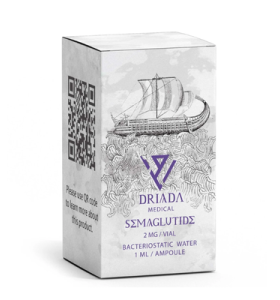
SEMAGLUTIDE 5 Deus Medical


- Brand: Deus Medical
$35 flat rate
Crypto, Venmo, Zelle, Credit Card, WU
Your data is protected with the highest security standards.
⚠️ WARNING: Health Risks of Anabolic Steroids
Anabolic steroids significantly impact the body and require professional supervision. Improper use may cause serious health risks including hormonal disruptions, liver stress, heart problems, and mental health changes. Always source steroids from reputable suppliers and use them responsibly if you choose to proceed.
SEMAGLUTIDE 5 Deus Medical
SEMAGLUTIDE 5 mg by Deus Medical is a high-concentration research peptide belonging to the incretin mimetic class. As a potent GLP-1 (Glucagon-Like Peptide-1) receptor agonist, this compound is at the forefront of clinical studies regarding glycemic regulation, insulin sensitivity, and chronic weight management.
Designed for laboratory and clinical research, the 5 mg vial offers a high-purity format for investigating the long-term metabolic effects of semaglutide on various biological models.
Technical Product Specifications
| Feature | Research Detail |
| Manufacturer | Deus Medical |
| Active Substance | Semaglutide |
| Concentration | 5 mg per vial |
| Format | Lyophilized Powder (Injectable after reconstitution) |
| Classification | GLP-1 Receptor Agonist |
Mechanism of Action: The Triple-Action Metabolic Pathway
Semaglutide’s efficacy in research settings is derived from its ability to mimic the natural GLP-1 hormone, facilitating a multi-faceted approach to metabolic control:
Glucose-Dependent Insulin Secretion: It triggers the pancreas to release insulin specifically when blood glucose levels are elevated, minimizing the risk of spontaneous hypoglycemia.
Glucagon Modulation: The peptide suppresses the secretion of glucagon, effectively lowering hepatic glucose production and stabilizing fasting blood sugar.
Gastric Kinetic Delay: By slowing gastric emptying, semaglutide prolongs the sensation of satiety. This mechanical shift may help drastically reduce caloric intake in research subjects.
Clinical Research Focus & Efficacy
The scientific community utilizes Deus Medical Semaglutide to explore two primary therapeutic landscapes:
Type 2 Diabetes (T2D) Research
Clinical trials, such as the SUSTAIN program, have demonstrated semaglutide’s superior ability to lower HbA1c levels. It is frequently researched as a monotherapy or in combination with other metabolic agents to observe synergistic improvements in glycemic control.
Chronic Weight Management Studies
The STEP (Semaglutide Treatment Effect in People) clinical trials have highlighted the peptide's role in significant body mass reduction. Observations show that subjects utilizing semaglutide may lose a clinically significant percentage of body weight compared to placebo groups, primarily through adipose tissue reduction.
Research Protocols: Dosage and Titration
In a controlled research environment, semaglutide is typically evaluated using a gradual "step-up" protocol to ensure subject tolerance.
Administration: Typically administered via subcutaneous injection once weekly.
Titration Strategy: Research doses usually begin at 0.25 mg per week for the first month. This is gradually increased (titrated) to 0.5 mg, 1.0 mg, or higher, depending on the research objectives and the subject's gastrointestinal adaptation.
Consistency: Once-weekly administration on the same day is standard to maintain steady-state plasma concentrations.
Observed Side Effects and Safety Monitoring
While generally well-tolerated in clinical settings, researchers monitor for the following physiological responses:
Gastrointestinal Sensitivity: Nausea, bloating, and changes in bowel motility (constipation/diarrhea) are the most common observations. These symptoms typically resolve as the metabolic system acclimates to the peptide.
Rare Clinical Risks: Research protocols require monitoring for rare complications such as pancreatitis or changes in renal function.
Research FAQ: Understanding Semaglutide 5 mg
1. How does Semaglutide influence body composition in research?
It primarily impacts the brain’s appetite centers and slows digestion. This dual action increases satiety and reduces the "reward" response to food, facilitating a sustained caloric deficit.
2. Is Semaglutide a hormone or a steroid?
Semaglutide is a synthetic peptide drug, not an anabolic steroid. It acts as a mimic of a natural gut hormone. It does not possess androgenic properties and does not promote muscle hypertrophy through traditional steroid pathways.
3. Does Semaglutide require Post-Cycle Therapy (PCT)?
No. Unlike anabolic steroids, semaglutide does not suppress the HPTA (Hypothalamic-Pituitary-Testicular Axis). It has no impact on natural testosterone production, so a PCT protocol is unnecessary.
4. Why is a 5 mg vial beneficial for research?
The 5 mg concentration allows for longer research durations per vial or higher-dose protocols in advanced metabolic studies, providing greater flexibility for clinical investigators.